


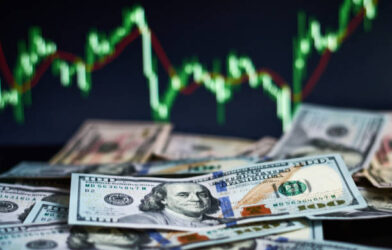
The decline in the US dollar and escalating trade war between the US and China has led investors to seek safe havens, resulting in gold reaching a record high. Gold, considered a “safe haven” asset, continues to break records due to geopolitical risks, increased uncertainty, economic slowdown concerns, and uncertainties surrounding the potential consequences of the US’s aggressive tariff policy. Today, the gold price per ounce reached a record high of $3,174.74 with a 2.8% increase. Yesterday, the gold price per ounce also rose by about 3%. Gold is currently one of the few commodities unaffected by customs duties. The price per ounce has increased by over 36% in the past 12 months and by more than 20% this year. The message from China stating that they will respond fully to the “trade war” initiated by the US, in addition to the uncertainties surrounding President Donald Trump’s tariff policy, has been influential in the rise of the gold price per ounce. Concerns have been raised by President Trump’s tariff package announced on April 2nd, which could trigger a widespread trade war leading to global economic slowdown. Trump’s announcement of suspending high tariffs on some countries for 90 days yesterday revitalized global stock markets and did not slow down the rise of gold. US-China Tariff Escalation President Donald Trump announced on April 2nd additional customs duties for trade partners, including China, under the scope of “mutual tariffs.” In response, China increased customs tariffs on imported products from the US by 84%, to which Trump responded by raising the tariffs to 125%. Following Trump’s announcement of increasing tariffs on products imported from China to 125%, China signaled that it would not back down in the escalating tensions. Furthermore, the White House clarified today that the tariff rate imposed on China by President Trump yesterday reaching 125% only applies to reciprocal tariffs, and the total tariff rate reaches 145% when including those imposed due to the fentanyl crisis. The US dollar index, used to measure the value of the US dollar against the euro, Swiss franc, Japanese yen, Canadian dollar, British pound, and Swedish krona, fell by up to 1.80% to 101.08.


Magazines cover a wide array subjects, including but not limited to fashion, lifestyle, health, politics, business, Entertainment, sports, science,
Breaking News :

- Wednesday January 28, 2026





Comments are closed