



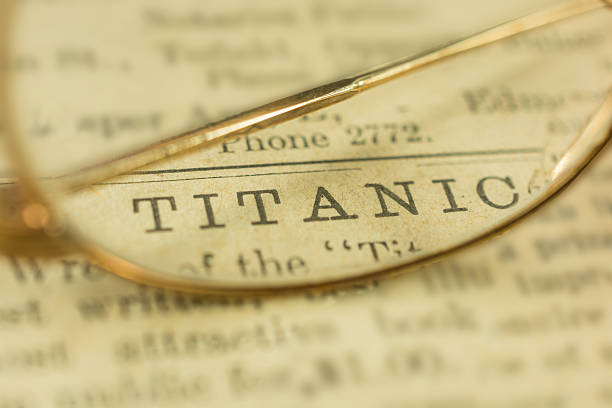
The legendary passenger ship Titanic, which sank 113 years ago, is back in the headlines. According to recent research, if the conditions were slightly different on the night of April 14, 1912, the Titanic could have survived without sinking. Scientists believe that hitting the iceberg head-on would have caused less damage than scraping against it. So, could the Titanic have been saved from the disaster that claimed thousands of lives?
Despite over 113 years passing since the sinking of the Titanic, its secrets continue to surface. New digital images of the wreckage allow scientists to reconstruct the ship’s sinking with groundbreaking details. The deep-sea mapping company Magellan sent underwater vehicles to explore the wreckage in the depths of the Atlantic Ocean.
IF CONDITIONS WERE DIFFERENT, IT COULD HAVE BEEN SAVED
According to a detailed 3D model, the Titanic could have survived without sinking if conditions were slightly different on the night of April 14, 1912. Scientists believe that hitting the iceberg head-on would have caused less damage than scraping against it. Yasmin Khan, a modern history professor at Oxford University, commented, “The Titanic has never easily revealed its secrets. Watching it has been like shedding light on darkness so far.”
1,517 PEOPLE LOST THEIR LIVES
The Titanic tragically sank early on April 15, 1912, after hitting an iceberg. Of the approximately 2,224 people aboard, around 1,517 lost their lives. Even though the Titanic received only a slight impact from the iceberg during the collision, it caused the entire starboard side of the ship to slice, leading to flooding.
A MASSIVE GAP FORMED IN SIX SECONDS
The collision with the iceberg lasted for six seconds, resulting in an 18-square-meter gash on the ship. The gap covered a total of six compartments of the ship. The Titanic was designed not to sustain damage from water entering four compartments, but unfortunately, six compartments were impacted. Therefore, the flooding of the bow section and boiler room number 5 was critical.
A FEW SECONDS COULD HAVE CHANGED EVERYTHING
If the observers had spotted the iceberg a few seconds earlier and sent a warning, the gaping hole that sank the ship would not have been as wide. Less compartments would have been breached by water, potentially altering the fate of the ship significantly. The research also strengthens the belief that more lives could have been saved if the ship had not altered its course.
FRONTAL COLLISION OF THE SHIP
If the Titanic had hit the iceberg head-on, hundreds of people would likely have died from the impact; however, thousands of lives would have been saved. Only a few compartments in the front would have flooded, and the ship would have remained afloat until a rescue vessel arrived. It is reported that while all the crew lost their lives in the tragedy, their heroic dedication to duty saved the lives of hundreds of people until the last moment.







Comments are closed